eXTReMe Tracker

10 May 2010

From Laurence Arnold, Bloomberg: Lena Horne, Jazz Singer Who Broke Color Barriers, Dies at 92

By Laurence Arnold

May 10 (Bloomberg) -- Lena Horne, the jazz singer who broke color barriers in Hollywood and fought for civil rights during a seven-decade career that took her from the Cotton Club in Harlem to Hollywood and the Broadway stage, has died. She was 92.

She died yesterday at the New York-Presbyterian/Weill Cornell Medical Center, the New York Times reported, citing her son-in-law, Kevin Buckley.

Thrust into show business as a dancer at age 16, Horne became one of the highest-paid black entertainers in America by 1943. She was one of the last survivors of the era of popular music that produced Duke Ellington, Billie Holiday, Ella Fitzgerald and Sarah Vaughan.

She was the offspring of generations of mixed-race couples, and her alluring beauty -- long frame, copper-colored skin, dark eyes, high cheekbones and broad smile -- helped her land a movie contract with Metro-Goldwyn-Mayer in 1941. She was a pinup girl popular among U.S. soldiers during World War II.

“There was Helen of Troy and then Lena Horne,” choreographer Agnes de Mille said of Horne at the Kennedy Center Honors ceremony in 1984. “It’s her magic. I have seen people lean out of their seats to watch her.”

Horne captivated audiences with elegant interpretations of songs such as “Black Coffee” and “Just One of Those Things.” Though she grew tired of performing it, her signature song, “Stormy Weather,” had resonance in describing a public career and a personal life complicated by race and racism.

‘This Old Broad’

“I’ve had stormy weather all my life, and if anybody can sing about the trouble they’ve seen, it’s this old broad,” she said in 1981 during the run of her hit one-woman Broadway show, “Lena: The Lady and Her Music.”

In 1941, Horne signed a seven-year movie contract with MGM that made her the only black woman with a long-term studio deal. She appeared in a dozen films over the next decade, mostly in singing roles that could be excised when the films were shown in white theaters in the U.S. South.

“They didn’t make me into a maid, but they didn’t make me anything else, either,” she later wrote. “I became a butterfly pinned to a column, singing away in Movieland.”

To MGM, Horne was “the Negro beautiful enough -- in a Caucasian fashion -- for white Americans to accept,” James Gavin wrote in his 2009 biography, “Stormy Weather: The Life of Lena Horne.”

Friendship With Robeson

Horne acted on her convictions about racial equality. During a World War II show for U.S. troops in Kansas, she walked off the stage because German prisoners of war were seated in front of black soldiers. She was blacklisted from U.S. films for seven years in the 1950s because of her friendship with Paul Robeson, the black actor and civil-rights activist. In 1963, she marched on Washington with Martin Luther King.

“Whatever petitions I’ve signed or benefits I’ve played I’ve not done because I had any broad or deep political program I was pushing,” Horne wrote in her autobiography. “I had just learned from my father and from my grandmother not to take any nonsense from anybody.”

Lena Mary Calhoun Horne was born on June 30, 1917, into a professional middle-class family in Brooklyn, New York. Her paternal grandmother, Cora, was a community leader and a feminist, and she had her 14-month-old granddaughter Lena appear on the cover of the National Association for the Advancement of Colored People’s October 1919 “Branch Bulletin.”

Early Abuse

Horne’s mother, Edna, was estranged from her husband, Edwin. She struggled to be an actress and alternated between taking young Lena out on the road and leaving her with relatives or strangers, mostly in the South, some of whom abused her.

When Horne turned 16, she was sent by her mother, who was now back in New York and remarried, to an audition to join the chorus at the Cotton Club in Harlem, where black performers entertained mostly white, affluent audiences. It was there that Horne met jazz greats such as Cab Calloway and Duke Ellington, whose composer, Billy Strayhorn, became a big influence.

In an attempt to win freedom from her mother and stepfather, Horne in 1939 married Louis Jones, a preacher’s son and politician, with whom she had two children. They separated in 1941 and divorced in 1944.

“I was simply using marriage -- and I’m afraid Louis -- to run away from a life I did not like,” Horne wrote.

In 1940, she took a job with the Charlie Barnet orchestra, a white swing band. On tour she would sometimes be forced to wait in the ladies’ room instead of remaining on stage with the rest of the band. When hotel clerks turned her away, Barnet would take the whole band to stay somewhere else.

Too Beautiful

Her film career began when an MGM talent scout saw her perform at Little Troc in Hollywood. Her complexion made fitting onto the screen difficult. Too dark-skinned to be considered for a starring role in segregated America, she was nonetheless seen as too light and beautiful to play a maid.

“She opened so many doors as the first beautiful black woman in movies,” actress Leslie Uggams told Jet magazine in 2007. “Black women were only allowed to play maids in the movies, and all of a sudden, the black community had this goddess.”

She had major roles in “Cabin in the Sky” and “Stormy Weather” in 1943. In other films such as “Panama Hattie” (1942) and “Swing Fever” (1943) she was used primarily in musical numbers.

She prospered as a nightclub entertainer, appearing with Count Basie, Tony Bennett and Harry Belafonte. Through much of her career, she had a standoffish demeanor on stage that she attributed to the pressure she put on herself to succeed for her family’s sake.

‘I Hated It’

“My mother wanted me to be a star and I worked hard for her goal, though I hated it so much that when later I achieved what she wanted for me I could really not enjoy it,” she wrote.

Horne married Lennie Hayton, a composer and bandleader who ultimately became her manager, in 1947 in London. Because he was white, they kept the relationship secret for three years.

Horne joined Robeson in a group called Progressive Citizens of America to fight racism and was blacklisted from film, television, radio and recording in 1950. She toured nightclubs and by 1956 returned to the movies as the blacklist was lifted. She appeared at New York’s Waldorf-Astoria hotel in 1957 and starred in the Broadway musical “Jamaica” in 1957 to 1959.

During the 1960s, Horne appeared at rallies for civil rights throughout the South. In 1971 and 1972, she suffered the deaths of her husband, her father and her son, Teddy, in a period of 12 months and briefly retreated from public life.

Santa Barbara Retirement

“She was finally devastated,” Horne’s daughter, Gail Lumet Buckley, wrote in a book on her family. “She retired to Santa Barbara, California, to plant cacti.”

After emerging from that crisis, she began to enjoy performing more.

“It took 1960s politics and 1970s personal grief for her to have the courage to present herself to an audience,” Buckley wrote. “When she did, she enjoyed the greatest triumph of her career.”

She played Glenda the Good Witch in “The Wiz” (1978), directed by Sidney Lumet, Gail Buckley’s former husband. Her “Lena: The Lady and Her Music” played to sold-out crowds on Broadway for 333 performances in 1981 and 1982 and won a special Tony Award and two Grammys. Newsweek said of her performance: “Lena Horne is a revelation -- of astonishing power and complexity.”

Horne continued to record through the 1990s, releasing her last studio recording, “Soul,” in 1999. Her last major public appearance was in 1999 at an all-star salute, “Lena: The Legacy,” at Avery Fisher Hall in New York’s Lincoln Center.

----With assistance from Laura Tillman in New York. Editors: David Henry, Jim Ruane.

To contact the reporter on this story: Laurence Arnold in Washington at larnold4@bloomberg.net

To contact the editor responsible for this story: James Greiff at jgreiff@bloomberg.net


***


The Legendary Lena Horne

Lena Horne (circa 1935), Photograph: Frank Driggs Collection/Getty Images

1943: A poster advertising Horne's lead role in Stormy Weather. Her version of the title song was a major hit, and became her signature piece,

Photograph: ITV/Rex Features
Photograph: 1994 - In New York (Garth Vaughan/AP)

1958: Horne was respected as both a jazz and blues singer, and had numerous hit showtunes

Photograph: Cinetext/Sportsphoto Ltd/Allstar

1948: Horne was considered Hollywood's first black sex symbol,

Photograph: Cinetext/Sportsphoto Ltd/Allstar

1947: At the Copacabana nightclub. Such appearances provided a lucrative addition to her income from film and radio

Photograph: Leonard McCombe/Time & Life Pictures/Getty Image

1942: Performing in the film Panama Hattie, the first of several movies she made with MGM early in her career,

Photograph: Cinetext/MGM/Allstar


Labels: , , , ,

Link

05 May 2006

auraeus solito and jeffrey jeturian

two friends are winning accolades worldwide as committed filmmakers.

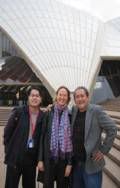
"ang pagdadalaga ni maximo oliveros" (the blossoming of maximo oliveros), by auraeus solito (also known as kanakan balintagos, his aboriginal palawanon name) will have its australian premiere on 12 and 13 may at the sydney opera house during the 6th message sticks (australian indigenous film festival). no filipino film has ever been exhibited at the opera house. this is so unprecedented.


auraeus was my student in communication classes at the university of the philippines from 1989 to 1991. i have nothing to do with his success. but I can vouch for his integrity as a person and as an artist. his sister arlene was my seatmate in college. the solito siblings grew up near the slums of sampaloc (manila) where i was also born and raised. auraeus worked very hard to qualify as a student at the philippine science high school and the university of the philippines. he took up creative writing and theater in college.

prior to maximo, auraeus received acclaim for directing the music video of the eraserheads' "ang huling el bimbo." the video paired band members ely buendia, marcus adoro, raimund marasigan and buddy zabala (my student in humanities 1, 1990) with actress wena basco (another former student). the video bagged prizes at the n.u. 107 rock awards locally and the mtv international music awards at the radio city music hall in new york. i caught the music video for the first time on cable tv when i was studying at cambridge in 1996. tired and homesick, i cried buckets of tears being haunted by the video's replications of sampaloc under marcos and martial law.
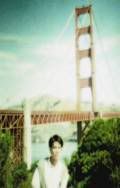
by late 2005, robert redford's team had selected maximo to land in competition for this year’s sundance film festival (america’s most prestigious film festival). maximo's selection turns out to be a first for the philippines. the film has also received many best picture prizes and citations from berlin (germany), montreal (canada), rotterdam (netherlands), las palmas de gran canarias (spain), turin (italy), imagineNative (international film festival of indigenous films, toronto, ontario, canada), asian festival of 1st films (singapore) and cinemalaya (manila) film festivals.
maximo was also selected as the opening film at the 35th new directors/new films series, presented jointly by the film society of lincoln center and the museum of modern art's film and media department. maximo had its new york premiere at the walter reade theater in lincoln center and at the titus theater at MoMa.
most recently, maximo was exhibited at the bay area's kabuki theater during the 49th san francisco international film festival last 20 april to 4 may 2006.

meanwhile, jeffrey jeturian ’s recently-completed digital film "kubrador" (the bet collector) has been accepted in competition at the 2006 moscow international film festival.

"kubrador" revolves around “jueteng,” the game of numbers dating back to the country's spanish colonial period (1521-1898). to this day, jueteng lords and operators are sprawling all over the country. though illegal, jueteng affects the lives of individuals and institutions back home. former philippine president joseph estrada was thrown to face an impeachment trial allegedly because of his involvement with jueteng.

the last filipino films selected for competition at moscow were gil portes’ "saranggola" (the kite) in 1999 and "mga munting tinig" (small voices) in 2003. the kite, starring lester llansang and ricky davao, was scripted by the multi-awarded butch dalisay. small voices, featuring alessandra de rossi, was written by senedy que, adolf alix jr. and gil portes.

jeffrey took up broadcast communication at the college of mass communication, university of the philippines. immediately after college, he moved up the professional ladder, from being production assistant (e.g. marilou diaz-abaya's "alyas baby tsina" starring vilma santos), script supervisor (e.g. maning borlaza and leroy salvador’s "bituing walang ningning" starring sharon cuneta; eddie garcia's"saan nagtatago ang pag-ibig" starring vilma santos and "huwag mo itanong kung bakit" starring dina bonnevie; leroy salvador's "sa hirap o ginhawa" starring sharon cuneta), art director/production designer (e.g. chito rono’s "eskapo," "dahas" and "davao" tv series on rpn 9; national artist ishmael bernal’s "dear teacher" tv series on ibc 13; abs-cbn's "maala-ala mo kaya,"; gma 7's "gma telesine," "anna karenina" and "villa quintana"), assistant director and television director (e.g. "legal forum," "maala-ala mo kaya," "kirara," and "pira-pirasong pangarap") over a 15-year period before finally fulfilling his dream of becoming a full-fledged film director in 1998.

jeffrey’s debut film "enter love" (sana pag-ibig na,1998), is a moving narrative about a mistress and her deceased lover's son. shot on a measly budget of US$50,000, the film bombed at the box-office. however, “enter love” received glowing reviews from the local critics. it also received numerous citations and awards especially best actress prizes for 1950s superstar nida blanca. "enter love" turned out to be blanca's last great film role before she was murdered in 2001.

jeffrey’s 2nd film is arguably his most definitive. "fetch a pail of water" (pila balde,1999), a homage to national artist lino brocka, problematizes the plight of slum dwellers and their struggle for survival. the film was commercially and critically well-received. it won a netpac jury award at the 1st cinemanila international film festival in 1999 and a gold award at the 2000 worldfest international film festival in in houston, texas (u.s.a.). likewise, the manunuri ng pelikulang pilipino has selected fetch a pail of water as one of the 10 best philippine films for the 1990s.

jeffrey’s third film, "larger than life" (tuhog, 2000), satirizes the state of filmmaking in the philippines. the film also makes a powerful statement about the propensity of mainstream filmmakers to beautify and sanitize reality at the expense of truth and in the name of commerce. “larger than life” was selected in competition at the cinema of the present section of the 2001 venice international film festival.
in venezia, larger than life was shown alongside alfonso cuaron's "y tu mama tambien", antoine fuqua's "training day" (denzel washington's oscar-winning film with ethan hawke), clare peploe's "the triumph of love" (starring mira sorvino and ben kingsley), alejandro amenabar's "the others" (starring nicole kidman), the curse of the jade scorpion (starring, written and directed by woody allen), fruit chan's "hollywood hong kong", david mamet's "heist" (starring danny de vito and gene hackman), albert and allen hughes' "from hell" (starring johnny depp), milcho manchevski's "dust" (starring joseph fiennes and australia's david wenham), steven spielberg's "a.i., artificial intelligence" (starring haley joel osment, jude law and william hurt), jill sprecher's "13 conversation about one thing" (starring matthew mcconaughey) and mira nair's "monsoon wedding" (that year's golden lion winner for best picture). larger than life also received best picture awards from the 2001 star awards for the movies and the 2001 urian awards while garnering another gold award from the 2002 worldfest international film festival in houston, texas (u.s.a.).
i remember working on the lyrics of larger than life's incidental music (by south border's jay durias). jessica zafra did the other lyrics. afterwards, i helped around with the film's english subtitles. unfortunately, the subtitles in italian were hurriedly done by another filipino academic. at venice, they appeared notoriously medicore. fortunately, larger than life's strong visuals overwhelmed the awkward translations.
on the way to the venice red carpet, jeffrey gamely posed for the press from gondola to gondola. later, he sought the assistance of a regal-looking bystander to have his grand arrival photographs recorded for posterity. the "photographer" turned out to be the legendary jeanne moreau. though a bit shaken by his sudden discovery, jeffrey persisted a la margie moran: serene and unruffled.
jeffrey’s succeeding films have also received prizes and citations. these are: bridal shower (2004), one moment more (minsan pa, 2004) and bikini open (2005). jeffrey’s films have been selected for exhibition in festivals across sweden, france, switzerland, italy, slovak republic, czech republic, india, japan, korea, hong kong, bangladesh, singapore, thailand, colombia and the united states.

kubrador was completed only weeks ago. cineastes are already anticipating the arrival of the film with so much excitement and eagerness. kubrador's lead actress is the hugely talented gina pareno (previous remarkable performances: "magnificent bakya, " 1965, "let's dance the soul," 1967; mar s. torres' "dalawang mukha ng anghel," 1968; jun raquiza's "krimen: kayo ang humatol," 1974; maning borlaza's "bukas, luluhod ang mga tala,"1984; ishmael bernal's "working girls," 1984; and jeffrey's own "bridal shower," 2004). she is ably supported by thespians nanding josef (as father buboy), fonz besa (as eli) and maximo's soliman cruz ( as the policeman). jeffrey's production team is composed of joel jover (screenplay), armando lao (script supervision), boy yñiguez (direction of photography) and another good friend, leo abaya (production design). visual artist/television director/network executive johnny manahan turns in quite a performance by portraying a very special role: that of a jueteng master.

jay lozada now reports from manila that boy yniguez (director of photography for "larger than life" and "kubrador") has meticulously compiled highlights as well as behind-the-scenes from jeffrey's latest movie.

thinking filipinos should embrace alternative spaces offered by maximo and kubrador. in spite of processes that frequently undermine broadening cultural identities, auraeus solito and jeffrey jeturian have situated uniquely philippine expressions within pictures marked by brocolage, intertextuality and the blurring of genres.
Photobucket - Video and Image Hosting
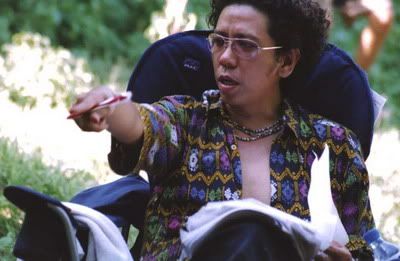
auraeus solito
Photobucket - Video and Image Hosting
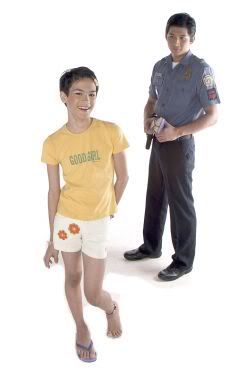
nathan lopez in the blossoming of maximo oliveros (2005)
Photobucket - Video and Image Hosting
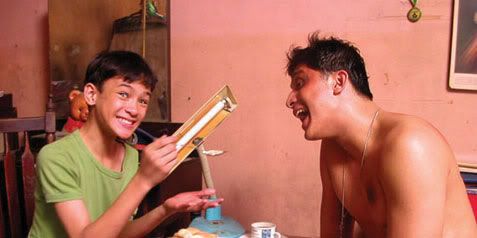
nathan lopez and j.r. valentin in the blossoming of maximo oliveros
Photobucket - Video and Image Hosting
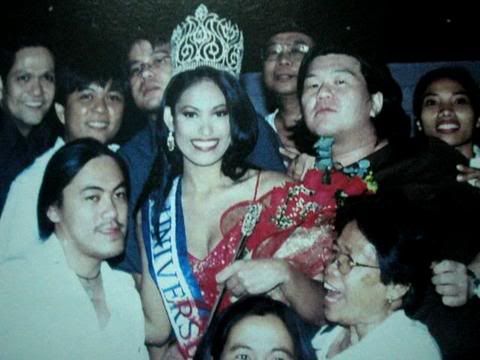
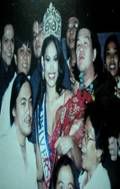
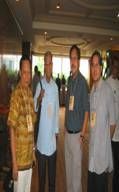
jeffrey jeturian (2nd from left) with friends including 2000 bb. pilipinas-universe nina ricci alagao onstage at the araneta coliseum
Photobucket - Video and Image Hosting
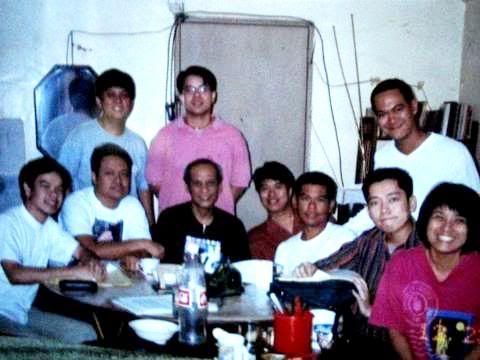
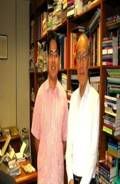
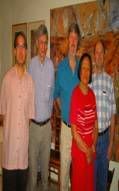
jeffrey jeturian (left, standing) with several writer-friends at prizewinning screenwriter armando lao's sikatuna pad in quezon city
Photobucket - Video and Image Hosting
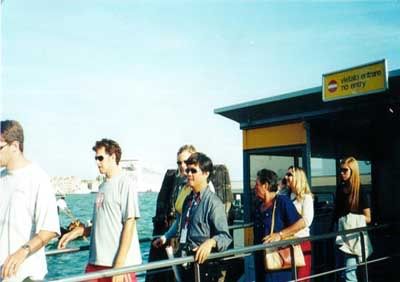
jeffrey jeturian disembarks at lido for the 2001 venice film festival
Photobucket - Video and Image Hosting
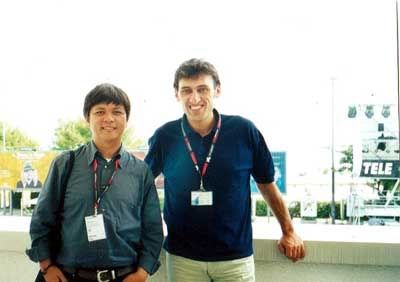
jeffrey jeturian with venice film festival director fausto pizzi
Photobucket - Video and Image Hosting
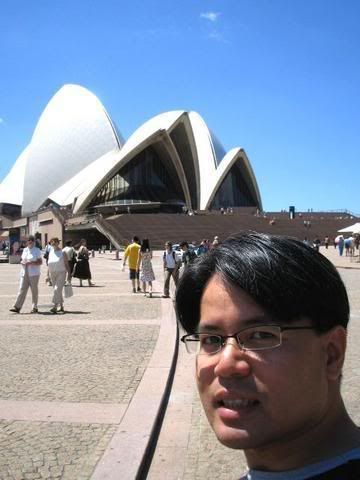
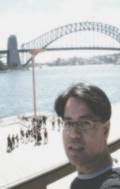
at the sydney opera house, venue of maximo's australian premiere next week

Labels: , , , , ,