eXTReMe Tracker

27 June 2009

quantum films' BIYAHENG LUPA (script and direction: armando lao)

Quantum Films (formerly MLR Films) announces the completion of prizewinning screenwriter Armando "Bing" Lao's directorial debut entitled BIYAHENG LUPA (SOLILOQUY) which stars (in alphabetical order) Archie Adamos, Susan Africa, Jose "Peping" Almojuela, Angel Aquino, Mercedes Cabral, Shamaine Centenera, Julio Diaz, Eugene Domingo, Jess Evardone, Carlo Guevara, Isabella de Leon, Jaclyn Jose, Coco Martin, Allan Paule, Andoy Ranay, Mely Soriano. Written and Directed by Armando Lao. Special thanks to Louie Ocampo.

Labels: , , , ,

Link

11 January 2008

rave reviews of jeffrey jeturian's kubrador in new york and cleveland

MoMA Brings a World of Movies to the City

By BRUCE BENNETT, New York Sun
9 January 2008

For decades, the Philippine Islands have stood in for war-torn Southeast Asia in American-produced movies (most famously and spectacularly in Francis Ford Coppola's "Apocalypse Now"), as well as real and fictional Latin American and African dictatorships, contested World War II strategic real estate, and nearly anywhere else an American-financed film script has called for palm trees, rice paddies, or cane fields.

In addition to playing host to foreign productions, the Philippine film industry has regularly released homegrown productions into theaters alongside dubbed American films such as "I Now Pronounce You Chuck and Larry" that ring up the lion's share of local ticket sales in Manila. But with few exceptions, American audiences rarely get to see them.

Beginning tomorrow, the Museum of Modern Art, in association with the Global Film Initiative, a Bay Area group that supports feature film projects that would otherwise go unmade or unreleased in the American-dominated world film exhibition market, will kick off GFI's annual touring "Global Lens" film survey with a week-long engagement of "Kubrador" ("The Bet Collector"). The 2006 film was written and directed by the Philippine filmmaker Jeffrey Jeturian and shot on the streets of Manila.

"Kubrador" is a handheld, digital video slice-of-life bearing a formal resemblance to Nicolas Winding Refn's 1996 gritty festival favorite "The Pusher," and any number of other low-budget, smash-and-grab dramas mixing actors and non-actors in real locations. A naturalistic cobbling of incident and detail, "Kubrador" portrays three days in the life of Amy (Gina Pareño), one of the thousands of anonymous touts working on behalf of Jueteng, an outlawed yet thriving underground lottery whose enormous invisible economy and profit potential attract and enslave criminals, bettors, police, and politicians alike. When not energetically hustling bets, accosting her regulars, suggesting numbers, and wheedling bigger antes per bet, Amy collects donations to offset funeral expenses from the endless parade of tragic deaths that Manila street life ensures. Her existence is almost entirely defined, as a bemused friend observes, by "Jueteng and dead people."

Mr. Jeturian's alternately oblique and intrusive camera is itself quite the hustler. But his jostle-cam immediacy is lent unusual gravity by Ms. Pareño, whose presence in this fascinating, funny, and at times heart-wrenching film makes "Kubrador" something of a torch bearer for the last four decades of Philippine cinema. For nearly half a century, Ms. Pareño has been a mainstay on her country's screens. Now in her 50s, the former bombshell (one of a string of actresses who portrayed native superheroine Darna onscreen in the '60s and '70s) has grown matronly, and her increased girth plays counterpoint to the unflagging intensity with which Amy alternately delivers sales spiels, crass observations, or motherly compassion from behind a ubiquitous dangling cigarette. Her remarkable performance elevates "Kubrador" to a film-going experience that is paradoxically fun and affirming, despite the inevitable onscreen downward spiral guaranteed by a life of offering little more than "grief and death," as Amy philosophizes between puffs.

While this fifth annual edition of Global Lens features eight films made by emerging filmmakers from as far afield as Croatia, Lebanon, and Argentina, MoMA will bring down the curtain on its survey with another week-long engagement of a film from the Pacific Rim. In place of the vérité economy of expression behind "Kubrador," Indonesian director Garin Nugroho's 2006 film "Opera Jawa" (running from January 16–21) offers an explosion of symbolism, surrealism, and spectacle that must be seen to be believed. The film's source material, an ancient Hindu fable called "The Abduction of Sinta," has been interpreted in Javanese dance and puppet theater for centuries. "Opera Jawa," which was commissioned by Peter Sellars in 2005 as part of his New Crowned Hope Festival commemoration of Mozart's 250th birthday, sees Mr. Nugroho give an indigenous folktale the Matthew Barney treatment.

A love triangle involving Sinta (Artika Sari Devi), her potter husband, Setio (Martinus Miroto), and local butcher hoodlum Ludiro (dancer Eko Supriyanto, who can list work with Julie Taymor and Madonna among his credits) forms the basis for a series of muscular and confrontational seductions and confessions, all sung and danced against real landscapes and interiors dressed and shot with an ingenious eye for the theatrically bizarre. "Nini Thowak, the magic puppet, gives a massage," sings a witness-bearing choir at one point. Whether or not "massage" is a subtitle typo is impossible to sort out as fingers caress, toes curl, and the film's deadly earnest and none too coherent storyline vanishes behind decorative tableaux of exponentially increasing non-specific and nevertheless evocative nuttiness.

"A bird, like a bird, not a bird," the ladies of the chorus opaquely recite. They could very well be singing about "Opera Jawa," a movie musical that's like a stage musical, and yet not really quite like anything else, and a film whose unique regional creative voice would remain silent were it not for production grants and distribution efforts undertaken by the Global Film Initiative.

MoMA's Global Lens program continues through January 24 (11 W. 53rd St., between Fifth and Sixth avenues, 212-708-9400).

***

Direct from the Cleveland Film Festival Review of "The Bet Collector"

Freelance writer, Anne Price is covering the Cleveland International Film Festival this week for About.com Cleveland. She'll be sharing her thoughts and opinions about the festival and the films throughout the next ten days. Below is her first contribution -- a review of the Philippine feature film, The Bet Collector.

Determined, loving, religious Amelita (a tour-de-force performance by Gina Pareno) spends her early mornings praying to the Virgin Mary and her afternoons collecting bets as a jueteng kubrador in her poverty-stricken urban Manila neighborhood in The Bet Collector (Kubrador).

The illegal betting game has captivated the country in recent years, reaching as far up as former Philippine President Joseph Estrado, who was accused with receiving illegal gambling profit in 2000.

Jueteng Fever

Still, nowhere has the jueteng fever spread as fast or as fervently as it has in poor neighborhoods; according to the film, millions in the Philippines rely on the game as a means of income in an increasingly desperate environment.

Amelita is no exception. Sweet-talking her neighbors, showing them seeming benefit and opportunity within each of the challenges they confide to her, she believes wholeheartedly in religion and numerology -- that, and evading the police, pretending she's just collecting alms when they inspect her handbag for signs of scribbled bet numbers.

The betting itself consists of two numbers in a manual lottery pull usually performed by small numbers placed in a bottle, shaken and chosen randomly. For Amelita, the numbers represent each neighbor's challenge or concern and each has specific meaning she explains as she helps neighbors make their choices.

A Mother's Love

It's this willingness to turn adversity into asset that keeps Amelita afloat; with a husband whose primary job appears to be watching game shows; a freeloading, perennially pregnant daughter; and itinerant son-in-law, Amelita knows whatever the family needs she must provide. The character is reminiscent of Penelope Cruz' Raimundo in Almodovar's Volver: nothing is too much to ask a mother when it comes to taking care of those she loves.

Regardless of her own failing health and increased sense of "being bewitched" by the ghost of her deceased soldier son, she wanders amid the squalor and equally intense camaraderie found in the streets of her urban community, certain every event is a sign pointing to a pair of winning numbers.

Not even the death of a promising young neighbor student is without numerical divine intervention; though saddened while comforting the boy's grandfather, Amelita is no less inspired to jot down the betting numbers "13-29" for a future number pull, representing "grief to death."

Though police haul in various kubradors and jueteng participants, including Amelita, after booking said criminals they're not above placing bets themselves. Such is the nature of their daily lives: while illegal, there's something so enticing about the prospect of easy money in a world filled with relatively little worth dreaming about that even those charged with upholding the law cannot keep themselves away from the game.

Filming The Bet Collector

Director Jeffrey Jeturian (Bikini Open and Bridal Shower) is content to leisurely let his camera follow wherever Amelita goes, creating a natural, day-by-day character study of one woman's life during the week leading up to All Saints Day. Not plot-driven nor particularly detailed, the film is nevertheless filled with inspired moments deeper than they appear on the surface. The end result is a captivating composite of the beauty and meaning found within even the most materially impoverished lives and how human beings, regardless of social stature and living conditions, are connected by shared dreams and family ties.

The Bet Collector runs 98 minutes and also features Fonz Deza, Nanding Josef, Johnny Manahan, Jhong Del Rosario and Nico Antonio. An encore presentation of the film will be held on Sunday March 18 at 9:45 p.m.

Labels: , , , , , ,

04 August 2007

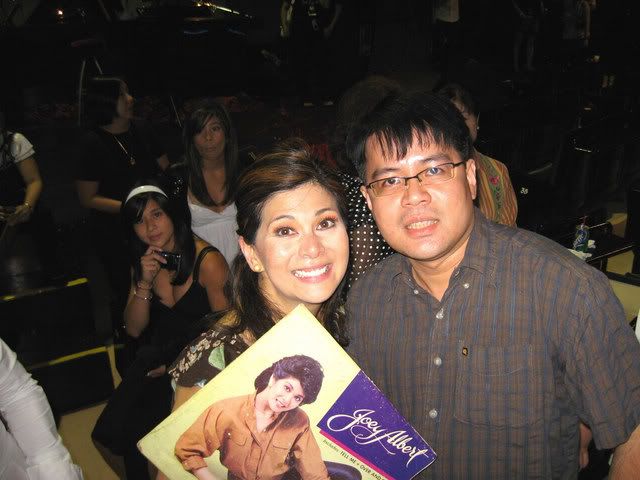
joey albert returns to manila

hours back, i attended joey albert's homecoming concert with louie ocampo at the music museum in greenhills. as usual, many people flocked to greenhills to listen to joey's music. she sang her hits (e.g., collaborations with louie ocampo: tell me, iisa pa lamang, yakapin mo ako, it's over now, ikaw lang ang mamahalin, and without you; gerry paraiso's over and over; robert more's a million miles away; danny tan's iisa pa lamang; and jose mari chan's i remember the boy). she also sang louie ocampo's other hits (e.g., ewan, shadow of time, you are my song, say that you love me), burt bacharach, henry mancini, other standards, samba and bossa nova classics. as expected, joey's concert was magical. her musical collaboration with louie ocampo remains a formidable force within the local music industry.


but it wasn't easy getting tickets to joey's concert. tickets were sold out days before the concert date. not wanting to disturb joey, i ran to carla (a good friend and joey's sister-in-law) yesterday morning. though joey was very busy preparing for her gig, she was able to text back and secure close-to-the-stage orchestra seats for me at the very last minute.

i've been an avid follower of joey's music for ages now. joey and i also exchanged emails quite frequently when i lived in australia as a phd student. i am just so thrilled to see her with her family in manila.

Photo Sharing and Video Hosting at Photobucket
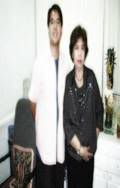
with vancouver-based filipina singer and composer joey albert

joey albert sings tell me with louie ocampo on the keyboard

***

The latest on Jeffrey Jeturian's KUBRADOR


GFI Announces Global Lens 2008 Film Lineup
New Crowned Hope, FIPRESCI and Un Certain Regard selections lead series in its 5th year

San Francisco, CA - August 7, 2007 - The Global Film Initiative announced today ten award-winning narrative, feature films from Argentina, China, Croatia, India, Indonesia, Iran, Lebanon, Philippines and South Africa that will headline the Global Lens 2008 film series.

"The films selected for Global Lens 2008 are beautiful, powerful stories that represent the best of cinema from around the world-they must be seen and experienced," says Susan Weeks Coulter, Board Chair of The Global Film Initiative.

Leading the list are critical favorites Opera Jawa (New Crowned Hope), The Bet Collector (FIPRESCI) and Luxury Car (Un Certain Regard). Also included is Sundance/NHK award-winner, The Custodian (Golden Berlin Bear nomination), and South African comedic hit, Bunny Chow (Official Selection, Toronto IFF).

Global Lens 2008, now in its fifth year, will premiere at the Museum of Modern Art, New York in January, before embarking on year-long tour of over thirty cities across the United States. For screening-dates and locations, please visit: http://www.globalfilm.org/calendar.php
Global Lens 2008 films:

· ALL FOR FREE (SVE DZABA), dir. Antonio Nuić, Croatia, 2006
Personal tragedy leads a young man to buy a mobile refreshment truck and embark on a darkly humorous and quixotic journey across post-war Bosnia-Herzegovina.

· THE BET COLLECTOR (KUBRADOR), dir. Jeffrey Jeturian, Philippines, 2006
A resilient housewife's job of collecting cash bets on the local numbers-game takes a psychological toll on her in the days before All Saint's Day.

· BUNNY CHOW, dir. John Barker, South Africa, 2006
Three up-and-coming comedians head out on a road trip, abandoning rules, reason and girlfriends to find music and the meaning of life in the "new" South Africa.

· THE CUSTODIAN (EL CUSTODIO), dir. Rodrigo Moreno, Argentina, 2006
A man's threshold for the mundane is chronicled by the uneventful days of his life as a bodyguard for a high profile politician.

· THE FISH FALL IN LOVE (MAHIHA ASHEGH MISHAVAND), dir. Ali Raffi, Iran, 2005
A group of resourceful women use food to convince a stubborn businessman to allow them to continue operating a restaurant in a building he owns.

· KEPT & DREAMLESS (LAS MANTENIDAS SIN SUEÑOS), dir. Vera Fogwill and Martín Desalvo, Argentina, 2005
Set during Argentina's economic crisis of the nineties, a drug-addicted mother struggles to keep her life afloat with the aid of her fiercely affectionate nine year-old daughter.

· THE KITE (LE CERF-VOLANT), dir. Randa Chahal Sabbag, Lebanon, 2003
On the eve of her marriage, a Lebanese girl realizes she is in love with the Israeli solider guarding the border checkpoint that separates her from her fiancé.

· LET THE WIND BLOW (HAVA ANEY DEY) dir. Partho Sen Gupta, India, 2004
At the height of nuclear-tensions between India and Pakistan, a restless group of friends weigh the bitter reality of their lives against fate and the philosophy of a nation.

· LUXURY CAR (JIANG CHENG XIA RI), dir. Wang Chao, China, 2006
A man travels to the city to visit his daughter-a karaoke bar escort-hoping to fulfill his wife's last wish of finding their missing son.

· OPERA JAWA, dir. Garin Nugroho, Indonesia, 2006
In the lush interior of Java, a potter's wife is seduced into a tragic love triangle in this stylish adaptation of the Hindu epic, The Ramayana.
The Global Film Initiative is a U.S.-based, 501(c)3 organization specializing in the acquisition, distribution and support of independent film from the developing world. Founded in 2002 with the mission of promoting cross-cultural understanding through cinema, each year the Initiative awards numerous grants to deserving filmmakers from emerging nations, and supports a touring film series entitled Global Lens. For more information about the Global Lens film series and The Global Film Initiative programs, please visit: http://www.globalfilm.org.
***

from atty. joji alonso antonio:
armando lao, mlr rilms launch screenwriting workshop


In its continuing advocacy for the creation of alternative films, MLR Films wishes to invite all interested writers who have written a script for television, stage plays, short films, full length feature films, and similar materials, to a SCRIPT WRITING workshop. The workshop will be held at a venue, to be announced later, inside the UP Diliman campus. It is sponsored in part by the Film Development Council of the Philippines (FDCP). The workshop will be held every Saturday and Sunday afternoon from 1-7pm on the following dates: Sept 15/16, Sept 22/23, Sept 29/30, Oct 6/7, Oct 13/14, Oct 21/22 and Oct 27/28. The actual scriptwriting and consultation stage will be held in the months of November and December this year.

The workshop will be conducted by no less than Armando "Bing" Lao. For those who still don't know Bing, he grew up in General Santos, South Cotabato where he attended his primary and secondary education. In college, he took up Commerce at the University of the East, Manila. For the next eight years or so, Lao worked for various business companies in the accounting department. But in 1980, he decided he wanted to become a scriptwriter. He has never regretted that decision.

He initially wrote for television drama programs and anthologies, notable of which were VIVA’S SPOTLIGHT, RPN 9’s DAVAO and GMA’s docu-drama WALANG BAKAS.
To date, Bing has written over twenty produced screenplays, majority of them critically acclaimed.

He has received six Manunuri awards for Best Screenplay for the following films—Takaw-Tukso, Itanong Mo Sa Buwan, Pila-Balde, Tuhog and La Vida Rosa. His latest written work, Minsan Pa was adjudged the 2005 Best Picture by the Young Critics Circle. Internationally, Pila-Balde won the NETPAC Jury Award in the first CineManila International Film Festival and likewise won the Gold Award in the 2000 Worldfest Film Festival, Houston, Texas, U.S.A. It has since been exhibited in various film festivals abroad. Tuhog qualified as the Philippine official entry to the Cinema Present section in the 2000 Venice Film Festival.

Bing, who teaches film writing to both graduate and undergradute students at the University of the Philippines Film Institute, has mentored new writers whose films help propagate what he considers a narrative paradigm which favors strong cultural content and authentic representation, properties that make a film distinctly Filipino and globally competitive as well. Films like Masahista, Manoro, Kubrador, and Foster Child have validated this paradigm, the films having won acceptance and critical acclaim from prestigious film festivals abroad. The CineMalaya best picture Tribu is the latest product of Lao’s realist manual. The still unreleased Tirador, another realist film, has been accepted in the Toronto Film festival this year. The scripts of the two films were also written under Bing's supervision.

Bing has been asked a number of times to sit as juror to scriptwriting contests and to facilitate scriptwriting workshops. He was a member of the 2005 CineMalaya screening committee. When asked what advice he can give to new filmmakers, he quipped: “Be culturally correct”.

The workshop can only accomodate 30 people. Because of this limitation, we invite interested participants to email us as soon as possible your filmography so we can begin the selection process for the 1st batch of workshoppers. You may send your filmographies to jojialonso@mlrfilms.com or to armando_lao@yahoo.com or preferably to both. You may also contact our workshop director, Seymour "Meyor" Sanchez at 0918 3384771. The workshop will begin as soon as Bing arrives from the Toronto International Film Festival.

The workshop fee is P5,000. FDCP's has generously agreed to cover P3,000 of this fee. The actual cost to the participant has thus been reduced to P2,000 only. A word of caution to food seekers, there will be no lavish food served during the workshop. But there will be coffee with biscuits/cookies.

The scripts/products of the workshop will continue to be owned by the writer-participant. MLR Films and the FDCP will assist in finding potential producers for the finished products.

Thank you and kindly spread the word. We are looking forward to another batch of great scripts!

Labels: , , , , , , , , , , ,